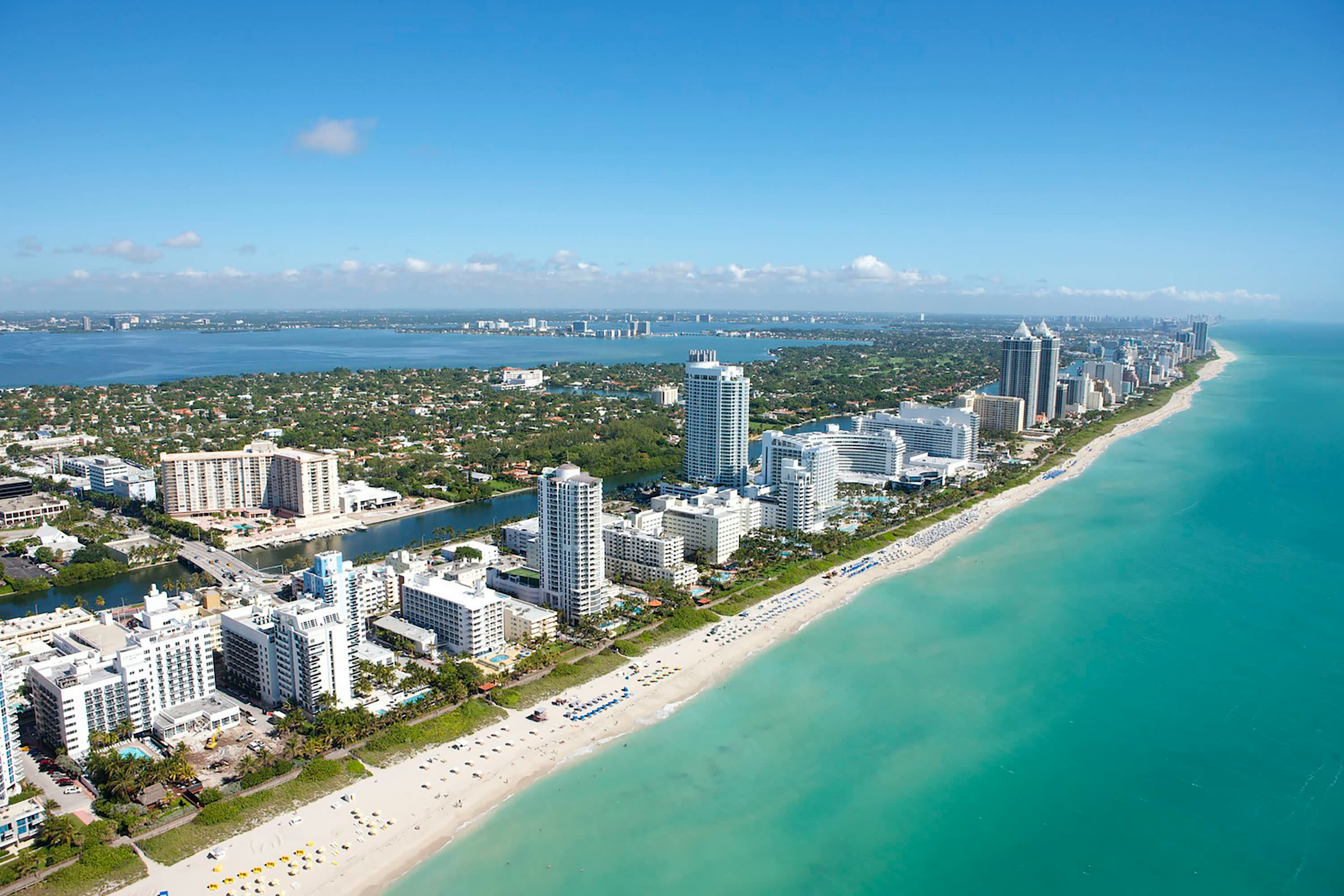
Moving to Miami: The Complete Guide for Canadians
By Claire Earle | Condo Loving
Every year, thousands of Canadians make the move to Miami — and it's easy to understand why. Warm weather year-round, no state income tax, world-class dining, and a thriving wellness culture make Miami one of the most sought-after destinations for Canadians looking to relocate or invest. But moving to another country, even one as familiar as the United States, comes with real paperwork, tax implications, and decisions that require careful planning.
As a wellness-focused real estate broker & yoga lover who made Miami home, I understand this transition from the inside. This guide covers everything you need to know before making the move.
Why Canadians Are Choosing Miami
Miami has quietly become one of Canada's favourite second cities. Canadians already represent one of the largest groups of foreign buyers in South Florida's real estate market, and that trend has only accelerated in recent years.
The reasons are straightforward. Florida has no state income tax — a significant shift from provinces like Ontario or British Columbia. The cost of luxury real estate, while not cheap, often compares favourably to Toronto or Vancouver for what you get. A two-bedroom condo with ocean views in Brickell or Miami Beach at $1.2M would cost significantly more in a comparable Toronto waterfront building. Add in the climate, lifestyle, and direct flights from most major Canadian cities, and the value proposition is hard to ignore.
For wellness-minded Canadians in particular, Miami offers something Toronto and Vancouver simply can't — the ability to practice yoga outdoors year-round, walk to the beach before sunrise, and build a life genuinely centred around how you feel, not just where you work.
Understanding Your Visa and Residency Options
This is the most important piece to get right before anything else. As a Canadian, you can visit the United States for up to six months per year without a visa. However, if you plan to live or work in Miami full-time, you will need the appropriate visa or residency status.
The most common routes for Canadians relocating to Miami include:
EB-5 Investor Visa — For those investing a qualifying amount in a U.S. business or development project that creates jobs. One of the most popular routes for Canadian real estate investors — more on this below.
TN Visa — Available to Canadians in specific professional occupations under USMCA (formerly NAFTA). If your profession qualifies, this is one of the more straightforward paths.
E-2 Treaty Investor Visa — For Canadians investing in and actively managing a U.S. business. This does not lead directly to a green card but can be renewed indefinitely.
EB-1 or O-1 Visas — For individuals with extraordinary ability in their field, including business, science, arts, athletics, or wellness.
Purchasing a property in Miami does not grant you the right to live in the United States full-time. Many Canadians own Miami condos and spend up to six months per year there without any visa beyond their passport. If you intend to stay longer or work in the U.S., consult an immigration attorney before making any decisions.
The 183-Day Rule and Tax Implications
One of the most misunderstood aspects of the Canada-U.S. relationship for snowbirds and relocators is the tax situation on both sides of the border.
In Canada, if you are deemed a tax resident, you are taxed on your worldwide income. Cutting ties with Canada for tax purposes requires more than just buying a U.S. property — you typically need to sever your residential ties, which can include selling your primary Canadian home, closing Canadian bank accounts, and surrendering provincial health coverage.
In the United States, the IRS uses the Substantial Presence Test, which counts the days you spend in the U.S. over a three-year period. If you exceed the threshold, you may be considered a U.S. tax resident and subject to U.S. income tax. The Canada-U.S. Tax Treaty provides some protection, but this is a complex area that requires advice from a cross-border tax specialist — not a general accountant.
The key takeaway: before you relocate, engage both a Canadian tax advisor and a U.S. cross-border tax specialist. The cost of that advice is minimal compared to the cost of getting it wrong.
Buying Property in Miami as a Canadian
Canadians can purchase real estate in the United States without restriction. The buying process is somewhat different from Canada, but straightforward once you understand the steps.
Pre-Construction Condos are particularly popular with Canadian buyers because they allow you to secure a unit at today's pricing with a deposit structure spread over the construction timeline — typically 10–20% at signing, with additional deposits at various construction milestones, and the balance at closing. This gives you time to arrange financing and immigration planning before you need to be in the country full-time.
Financing as a foreign national is available through several U.S. lenders, though the terms differ from what you may be used to in Canada. Expect to put down 30–40% as a foreign buyer, and expect a slightly higher interest rate than a U.S. citizen would receive. Some Canadian banks with U.S. operations, such as RBC Bank USA and TD Bank, offer cross-border mortgage products that can simplify the process.
FIRPTA (Foreign Investment in Real Property Tax Act) applies when you eventually sell. As a foreign seller, the buyer is required to withhold 15% of the gross sales price and remit it to the IRS. This is not an additional tax — it is a withholding against any capital gains tax owed — but it affects your cash flow at closing and requires proper filing to receive any refund due.
Can You Get a Green Card Through a Miami Condo Investment?
For Canadians who want to live in Miami full-time, the EB-5 Immigrant Investor Program is one of the most compelling pathways — and Miami's pre-construction market aligns with it particularly well.
The program grants permanent U.S. residency to qualified foreign investors and their immediate families — spouses and children under 21 — in exchange for a qualifying investment that creates American jobs.
The Investment Threshold
The minimum investment is currently $1,050,000 for a standard project. There is also an important deadline of September 30, 2026 for grandfathering protection that locks in today's rules and investment amounts. If you are seriously considering this route, timing matters more than most people realize.
Developments on My Site With EB-5 Connections
Several of the new developments I represent have been associated with the EB-5 program, meaning Canadian investors may be able to pursue residency through the same building they plan to call home:
Ora by Casa Tua, Brickell — One of Miami's most talked-about new towers, featuring 533 fully furnished residences, four dining concepts, wellness facilities, and a rooftop pool. Officially filed with USCIS under the EB-5 program with an investment requirement of $1,050,000. Units from $995,000. Est. occupancy 2029.
Okan Tower, Downtown Miami — A 70-story supertall combining luxury residences with a Hilton hotel in the heart of Downtown. Confirmed EB-5 eligible. Units from $1,250,000. Est. occupancy 2027.
Waldorf Astoria Residences, Downtown Miami — Miami's future tallest building at 100 stories, currently under construction on Biscayne Boulevard. One of the most high-profile EB-5 associated developments in South Florida. Units from $3,150,000. Est. completion 2028.
Cipriani Residences, Brickell — An 80-story branded tower bringing the legendary Cipriani hospitality experience to South Brickell, with round-the-clock dining services and an elevated wellness center. EB-5 connections referenced. Units from $1,759,900. Est. occupancy 2026.
Lofty Brickell — A boutique luxury tower in Brickell with strong rental flexibility, referenced alongside confirmed EB-5 developments. Units from $1,899,000. Est. occupancy 2027.
1428 Brickell — One of the most architecturally celebrated towers coming to Miami, with every residence directly facing Biscayne Bay. Referenced in EB-5 investment contexts. Units from $4,396,900. Est. occupancy 2027.
Important: EB-5 project allocations fill up and USCIS approval status can change. Before making any decisions, always confirm directly with the developer that EB-5 investment is currently available. I am happy to help connect you with the right contacts — reach me at claire@condoloving.com.
Understanding Condo Fees and Costs
Miami condo ownership comes with ongoing costs that are important to budget for, particularly if you are also maintaining a property in Canada.
HOA Fees cover building amenities, maintenance, insurance on the building structure, and often utilities like water. In newer luxury buildings, HOA fees can range from $1,000 to $5,000+ per month depending on the building and unit size.
Property Taxes in Miami-Dade County run approximately 1.8–2% of assessed value annually for non-homestead properties. If you establish Florida as your primary residence and qualify for the Homestead Exemption, you can reduce your assessed value and cap annual increases at 3%.
Special Assessments are one-time fees levied by a building's association to fund major repairs or reserve requirements. Florida passed legislation requiring buildings to fully fund reserves and conduct structural inspections on a regular schedule. When buying a resale unit, always review the building's reserve study and meeting minutes carefully.
Choosing the Right Neighbourhood — A Wellness Perspective
Miami is not one market — it is a collection of distinct neighbourhoods, each with its own character, price point, and lifestyle. As someone who teaches yoga and prioritizes wellness, I look at neighbourhoods a little differently than most brokers. Here is my honest take:
Brickell is Miami's financial district and a favourite among professional relocators. It is walkable, dense, and packed with new luxury towers and restaurants. For wellness buyers, the newer buildings here are leading the charge on amenity programming — think infrared saunas, cold plunge pools, meditation rooms, and on-site wellness concierges. Pre-construction options range from $500K to $17M+.
Miami Beach and South of Fifth offer the classic Miami lifestyle — ocean access, sunrise walks on the beach, and proximity to some of the best outdoor yoga and wellness studios in the city. South of Fifth in particular has a quieter, more residential feel, attracting buyers who want beauty and calm over buzz.
Edgewater sits between Downtown Miami and the Design District and offers some of the best value for waterfront living on Biscayne Bay. It has a growing arts scene and is close to Wynwood, one of Miami's most creative and walkable neighbourhoods.
Bal Harbour and Surfside are quieter, more European in character, with some of the most exclusive ultra-luxury developments in South Florida. Beach access, world-class retail, and a pace of life that actually lets you breathe.
Sunny Isles Beach offers oceanfront living at a slightly lower price point than Miami Beach, with a more relaxed atmosphere and easy access to nature preserves and outdoor spaces.
Wellness in Miami — What Canadian Buyers Don't Expect
This is the part nobody puts in a real estate guide, but as a yoga teacher it matters enormously to me and to the clients I work with.
Miami's wellness scene has exploded. There are world-class yoga studios, breathwork and sound healing spaces, cold therapy centres, and wellness-integrated restaurants in nearly every neighbourhood. Farmers markets run year-round. The ability to be outside — truly outside, moving your body and feeling the sun — every single day of the year has a profound effect on how you feel and how you live.
Many of my Canadian clients tell me the same thing after their first winter in Miami: they didn't realize how much the cold and the darkness had been affecting them until it was gone.
When I help buyers choose a building, I look at wellness amenities the same way I would look at a yoga studio — does this space actually support how you want to feel? That lens shapes every recommendation I make, and it is the foundation of the Wellness Score I am developing for every development on this site.
Healthcare and Practical Considerations
Health Insurance is one of the most significant practical differences between Canada and the U.S. As a Canadian living in Miami, you will not have access to provincial health coverage for care received in the United States. You will need to purchase private U.S. health insurance, either through the marketplace or through an employer. This is a meaningful monthly expense that belongs in your budget.
Banking — Opening a U.S. bank account is straightforward for Canadians with the right documentation. Canadian banks with U.S. operations can make this easier, and some allow you to open a U.S. account before you arrive.
Driving — Your Canadian driver's licence is valid in Florida. If you establish Florida residency, you will need to obtain a Florida licence within 30 days.
Working With a Wellness-Focused Miami Real Estate Specialist
Navigating a new market from another country — particularly one with as much new development activity as Miami — is challenging without local expertise. The pre-construction market requires someone who understands which developers have strong track records, which buildings are likely to appreciate, and how to negotiate the best terms.
As a yoga teacher and broker who specializes in Miami new developments, I bring a perspective that goes beyond square footage and price per foot. I look at light, air quality, wellness programming, neighbourhood energy, and long-term livability — not just investment metrics. I work with Canadian buyers regularly and understand the specific questions and concerns that come with purchasing from outside the U.S.
If you are considering a move to Miami or looking to purchase a property in South Florida, I would love to connect.
Claire Earle is a licensed real estate broker and yoga teacher specializing in Miami new developments across Brickell, Miami Beach, Edgewater, and beyond. Reach her at claire@condoloving.com or (305) 713-4423.
This post is for informational purposes only and does not constitute legal, tax, immigration, or financial advice. Please consult qualified professionals in each of those areas before making any decisions. EB-5 program rules are subject to change.